My PhD Research
Using a novel model system to understand the interactions between voltage-gated sodium ion channels and gating-modifier neurotoxins
Research in the Rowe lab (now at the University of Oklahoma):
Southern grasshopper mouse and Arizona bark scorpion. Photo credit: Matt Rowe Grasshopper mice are resistant to neurotoxins
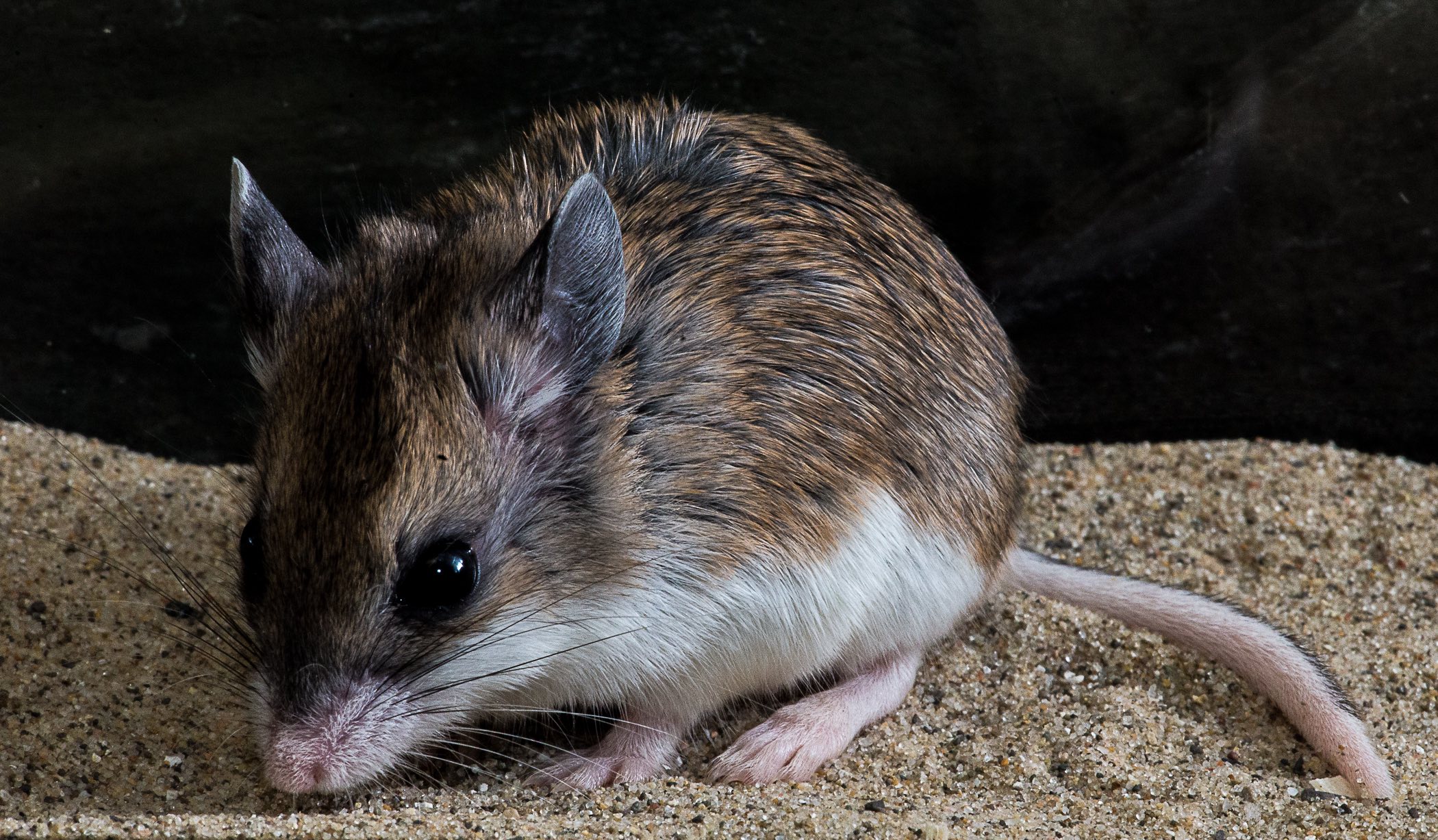
Grasshopper mice (Onychomys torridus) are predatory desert rodents that regularly hunt bark scorpions (Centruroides sculpturatus). Unlike other small mammals (e.g. infant humans), grasshopper mice do not experience pain and muscle paralysis that usually follows scorpion envenomation. This physiological resistance to scorpion venom makes grasshopper mice a great model to study pain and paralysis.
Scorpion venom targets ion channels Bark scorpions cause pain and death by disrupting the function (or gating) of voltage gated sodium and potassium ion channels. Previous work in the Rowe lab has shown that voltage gated sodium channels expressed in the pain pathway of grasshopper mice carry key amino acid modifications that enable the ion channel to bind with the venom and shut down pain signals; i.e., the grasshopper mouse uses venom as an analgesic!
Although we now understand some aspects of pain resistance, we know little about the mechanisms involved in resistance to venom induced mortality. Bark scorpion toxins are known to kill by disrupting the function of voltage gated ion channels of the diaphragm muscles. The toxins bind to muscle ion channels and induce premature and prolonged opening of these channels. Paralysis of the diaphragm muscle, ultimately, causes death by asphyxiation.
Grasshopper mouse muscle sodium ion channels are less sensitive to scorpion venom! We used molecular biology, electrophysiology and molecular evolutionary algorithms to understand the structural and functional properties of sodium ion channels expressed in the muscles of grasshopper mice. Our research showed that grasshopper mouse muscle sodium ion channels carry unique amino acid modifications that make them less sensitive to the effects of gating modifier (scorpion) neurotoxins. To take this one step further, we created recombinant genetic constructs of sodium channels and identified the functional consequences of amino acid substitutions in these important proteins. We are currently preparing these results for publication!